



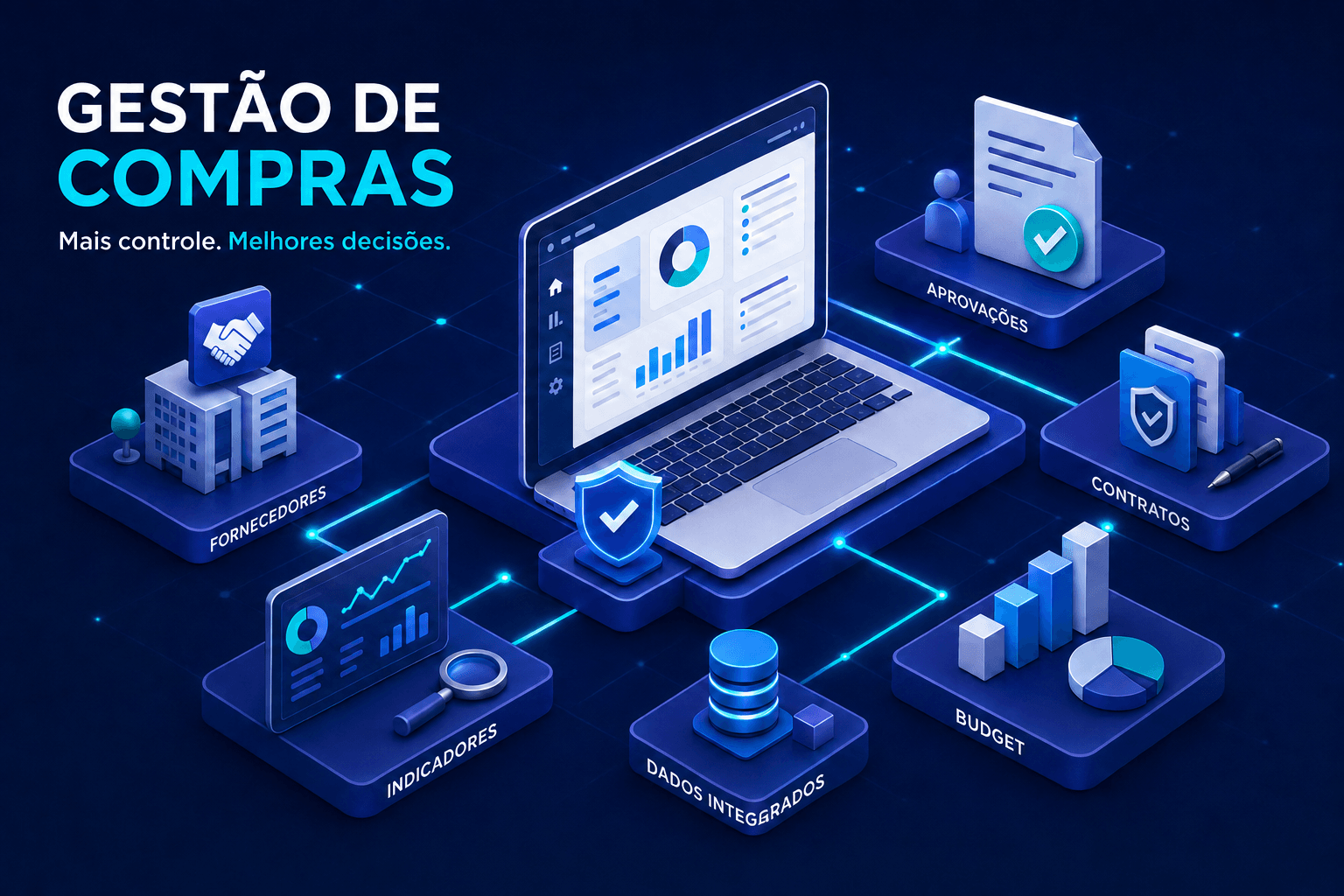
Procurement management is the set of processes, rules, responsibilities, and technologies used to transform a company's need into a planned, approved, negotiated, received, and monitored acquisition. When well-structured, it ceases to be merely an operational routine and becomes a source of efficiency, predictability, risk reduction, and better decision-making.
| Direct answer: An efficient purchasing management system connects the purchase intention to the actual expenditure. This means providing visibility into the need, budget, approvals, suppliers, quotes, contracts, receipts, and results in a single, governed workflow. |
What is purchasing management?
Purchasing management is the administration of the entire acquisition cycle of goods and services for an organization. It begins before the quotation, when a department identifies a need, and continues after the order, with receiving, supplier evaluation, contract monitoring, and results analysis.
In practice, the area coordinates different interests. The requester needs to receive the right item or service on time. The finance department needs predictability. The accounting department needs adherence to the budget. The legal department needs to control contractual conditions and risks. Operations need to maintain their continuity. The board needs to see where and why resources are being used.
Therefore, buying well isn't simply about finding the lowest price. It's about making a decision based on scope, timeframe, quality, risk, total cost, availability, commercial terms, and impact on the business. CIPS, one of the leading international references in procurement, treats the purchasing cycle as a journey that goes from defining the need to managing the contract, asset, or supplier.
Are purchasing management, purchasing, and procurement the same thing?
The terms are similar, but can represent different scopes. "Compras" (Purchasing) is usually associated with the activities of requesting proposals, negotiating, and issuing purchase orders. "Procurement" typically encompasses a broader view, including planning, sourcing, suppliers, contracts, risks, compliance, indicators, and continuous improvement. "Gestão de compras" (Purchasing Management), on the other hand, can bring together both dimensions: efficient execution and strategic governance of the process.
More important than the nomenclature is the actual scope of the area. If the team only gets involved after the decision has already been made, its ability to generate value is limited. When it participates from the definition of the need, it can question specifications, consolidate demands, expand competition, evaluate alternatives, and anticipate risks.
Why is purchasing management strategic?
Every purchase represents a choice about how the company will use its resources. When these choices are made via email, isolated spreadsheets, or undocumented conversations, the organization loses visibility and only reacts to problems after the expense has already occurred.
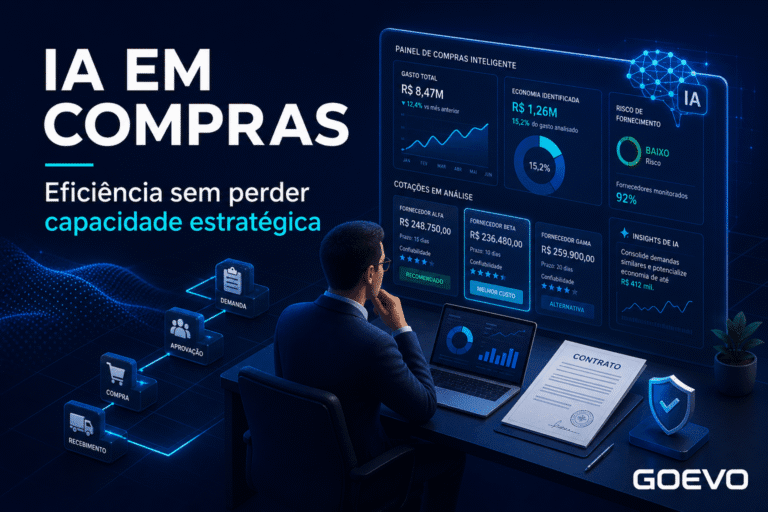
A structured management approach allows for action before, during, and after the purchase. Beforehand, it helps validate the need, verify the budget, and define the strategy. During the purchase, it organizes approvals, bidding processes, negotiation, and formalization. Afterward, it monitors delivery, contracts, performance, and results.
- Visibility: shows what will be purchased, by whom, for which unit, project, cost center, or purpose.
- Governance: applies policies, levels of authority, segregation of duties, justifications, and audit trails.
- Efficiency: reduces rework, duplicate data entry, manual billing, and time spent on repetitive tasks.
- Sustainable economy: it increases competition, improves negotiation, and considers the total cost, not just the unit price.
- Predictability: connects budget, orders, contracts, receipts, and future commitments.
- Risk management: anticipates problems related to supply, documentation, dependency, deadlines, quality, and compliance.
- Quality of decision: brings together history, proposals, indicators and evidence for more consistent choices.
In addition to efficiency, governance, and risk reduction, mature procurement management also considers environmental, social, and economic criteria in supplier selection, negotiations, and contracting. ISO 20400 guidelines for sustainable procurement They help organizations incorporate sustainability into their policies and purchasing processes by assessing risks and impacts throughout the supply chain.
What are the objectives of purchasing management?
Objectives vary depending on the sector and the company's maturity, but good purchasing management seeks to balance availability, cost, quality, lead time, risk, and governance. Reducing prices can be important, but it should not compromise business continuity or create hidden costs in the future.
- Guaranteeing supply: To meet the needs of the areas within the deadline and according to the correct specifications.
- Make better use of resources: Negotiate competitive terms and consider freight, taxes, maintenance, delivery time, quality, and risks.
- Standardize the process: Create a clear pathway for requisition, approval, quotation, contracting, ordering, and receiving.
- Increase compliance: Reduce off-policy purchases, unordered invoices, and decisions made without evidence.
- Developing suppliers: Monitor documentation, risk, performance, and opportunities for improvement.
- Support the strategy: Transform spending and market data into decisions about categories, contracts, and planning.
What are the steps in the purchasing process?
There is no single workflow that works for all companies. Simple purchases, service contracts, production materials, and emergency acquisitions require different levels of control. Even so, a complete process usually includes the following steps.
- Identifying the need. The requesting department specifies what it needs, why it needs it, when it needs it, and where the goods or services will be used.
- Purchase requisition. The request is recorded with specifications, quantity, cost center, project, attachments, and other necessary information.
- Budget validation and approval. The system or those responsible verify the balance, policy, authorization, and relevance before authorizing the purchase.
- Defining the strategy. Purchasing assesses category, criticality, supplier market, existing contract, consolidation possibilities, and negotiation model.
- Selection and invitation of suppliers. Participating suppliers are those that are registered, approved, and compliant with the type of supply and risk level.
- Quotation, RFI, RFP or RFQ. The company gathers information and proposals according to the complexity of the scope, with defined deadlines and criteria.
- Analysis and negotiation. The proposals are equalized and compared based on price, taxes, deadline, quality, history, conditions, and total cost.
- Selection, approval, and formalization. The decision is justified, approved when necessary, and formalized by a request or contract.
- Receiving and checking. Materials or services are checked against the order, the contracted conditions, and evidence of performance.
- Evaluation and continuous improvement. The company monitors suppliers, cost savings, lead time, exceptions, policy adherence, and opportunities for improvement.
Operational purchases vs. strategic purchases
Both dimensions are necessary. Operations maintain the daily flow; strategy improves how the company buys over time. The problem arises when emergencies, collections, and manual activities consume all the team's capacity.
| Operational purchases | Strategic purchases |
| It meets day-to-day needs. | Plans categories and future demand. |
| Issues orders and monitors deadlines. | Analyzes expenses, market, and risks. |
| Conducts recurring quotes. | Define sourcing and negotiation strategies. |
| Resolves pending issues and exceptions. | It reduces the cause of exceptions and rework. |
| Ensures business continuity. | It generates value, predictability, and governance. |
People, roles, and purchasing policy
Technology does not replace clear responsibilities. Consistent management defines who requests, who approves, who negotiates, who receives, who manages contracts, and who monitors the budget. Segregation of duties reduces risks and prevents a single person from controlling incompatible stages.
Purchasing policy should transform principles into actionable rules. Instead of remaining a rarely consulted document, it needs to guide the company's actual workflow: value ranges, minimum number of quotes, approval criteria, exclusive purchases, emergencies, regularizations, conflicts of interest, qualified suppliers, and mandatory evidence.
- Requester: describes the need and approves the service.
- Manager or approver: assesses priority, budget, and alignment with the business.
- Buyer: defines the strategy, conducts the market, and records the transaction.
- Supplier: presents data, documents, proposals, and proof of delivery.
- Legal and contracts: support clauses, risks, validity periods, addendums and obligations.
- Finance and controlling: they monitor the budget, commitments, documents, and payments.
- IT and ERP: They guarantee integration, security, registration, and technological continuity.
Are suppliers, contracts, and budget part of purchasing management?
Yes. Treating these issues as silos limits visibility. The purchase decision depends on the supplier's situation, the negotiated conditions, the existing contract, and the available budget. If this information only appears after approval, governance arrives too late.
Supplier management
In supplier management Registration should be the beginning of a continuous cycle. Approval, documentation, validity, risk, criticality, and performance need to influence new decisions. Strategic suppliers may require development plans; higher-risk suppliers may require additional verifications and approvals.
Contract management
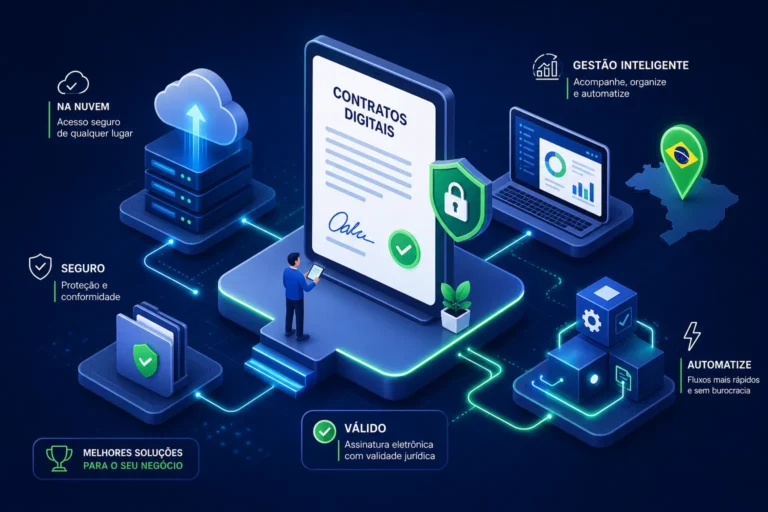
A good contract management They are not just for storing signed documents. They define prices, validity periods, limits, service levels, measurements, obligations, balances, and forecasts. When connected to purchases, they help utilize previously negotiated conditions and control consumption, renewals, and execution.
Budget and budgetary control
O Integrated budget control for purchases It allows you to track the request and approval process. The company should be able to differentiate between budgeted, committed, and actual values. This way, the manager understands the impact of the decision before the request is made, not just when the invoice reaches the finance department.
ERP or specialized purchasing platform?
ERP is essential for the core fiscal, accounting, financial, and transactional functions. However, many companies need a... specialized platform for purchasing management to organize the experience of requesters, approvers, buyers, and suppliers, as well as to conduct sourcing, contracting, approval, budgeting, and analytics processes in greater depth.
The most efficient architecture doesn't require replacing the ERP. Systems can be integrated so that each fulfills its role. While registrations and transactional movements remain synchronized, the purchasing platform governs the entire journey, from identifying the need to executing and monitoring the expenditure.
| Selection criteria: Evaluate the process coverage, ease of use, approval rules, vendor experience, integrations, security, auditability, and the quality of the data produced. A list of screens alone does not demonstrate that the system truly meets the company's needs. |
Which purchasing indicators should you track?
Monitoring purchasing indicators allows for the evaluation of efficiency, results, compliance, and risk. Measuring only savings can encourage short-term decisions. On the other hand, considering only the speed of the process can hide quick purchases that are poorly negotiated or made outside of policy.
- Purchase lead time: The time between the request and the issuance of the order or the formalization of the contract.
- Time per step: Number of days spent in the approval, quotation, negotiation, contracting, and payment phases.
- Savings and cost avoidance: result obtained in relation to a previously defined and validated baseline.
- Purchases under contract: percentage of expenses covered by contracts or commercial terms previously negotiated.
- Expenses outside the process: Volume of purchases made without a request, approval, order, or adequate justification.
- Competition: quantity and quality of invited and participating suppliers in each quotation.
- Adherence to the budget: The relationship between budgeted, committed, and actual values.
- Supplier performance: Evaluation of deadlines, quality, service, documentation, and incidents.
- Emergency purchases: Quantity, value, reasons, and recurrence by area, unit, or category.
- Team productivity: Processed volume, level of automation, rework, and capacity dedicated to strategic activities.
Purchasing Management Maturity Model
Transformation doesn't happen all at once. A maturity model helps identify the current state and choose realistic priorities. Below is an example of five levels.
| Level | Internship | Features |
| 1 | Reactive | Requests via email or message, frequent emergencies, low traceability, and little standardization. |
| 2 | Controlled | Basic workflow, defined approvals, organized registrations, and minimum record keeping. |
| 3 | Integrated | Purchasing, suppliers, contracts, budget, and ERP systems share data and rules. |
| 4 | Data-driven | Indicators, cost analysis, category management, and evidence-based decision making. |
| 5 | Intelligent | Advanced automation, predictions, and AI support decisions within rules of access, explainability, and human oversight. |
How to structure or transform purchasing management.
Transformation should solve real problems and generate adoption. Automating a poorly defined process only accelerates inconsistencies. At the same time, seeking the perfect design before starting can paralyze the project. The safest path is to combine a vision for the future with progressive deliverables.
- Make a diagnosis. Map existing processes, systems, spreadsheets, volumes, categories, units, contracts, exceptions, and indicators.
- Define measurable objectives. Choose outcomes such as reducing lead time, increasing contract coverage, decreasing out-of-process purchases, or expanding competition.
- Draw the target flow. Define steps, responsibilities, criteria, exceptions, and integrations without creating unnecessary bureaucracy.
- Organize data and records. Review suppliers, items, categories, cost centers, projects, users, and approval rules.
- Prioritize a first wave. Start with processes or units that are relevant and have the conditions for adoption, while maintaining a roadmap for expansion.
- Integrate technology and change management. Train users, involve approvers and suppliers, communicate benefits, and follow up on real challenges.
- Measure, correct, and evolve. Review indicators, times, exceptions, and feedback to continuously improve the process.
Common mistakes in purchasing management
- Involve Purchasing only when the supplier has already been chosen.
- Using the lowest price as the sole decision criterion.
- Establish equal levels of authority for any category, risk, or unit.
- Require the same information and documentation from all suppliers.
- Keep contracts, budget, and approvals outside the purchasing workflow.
- Accepting emergency purchases without considering cause and frequency.
- Automating without simplifying the process and without considering the user experience.
- Maintaining duplicate data or data that is not integrated with the ERP system.
- Evaluating the project solely based on implementation, without monitoring adoption and results.
How GOEVO supports procurement management.
GOEVO SCM organizes the purchasing journey with requisitions, approvals by level of authority, online quotes, comparative charts, purchase orders, suppliers, contracts, budget, inventory, indicators, and integration with ERPs. The goal is to provide visibility into the process without sacrificing the agility of the areas and distributed operations.
In practice, the platform functions as a specialized governance layer. Requesters find a simple way to register needs; approvers receive context to make decisions; buyers focus on competition and negotiation; suppliers interact in a structured environment; and the company maintains history, evidence, and data to track what has been done.
| Next step: Assess the maturity of your company's purchasing management and identify the main bottlenecks in process, data, governance, integration, and user experience. |
Conclusion
Procurement management is a business discipline. It connects needs, people, suppliers, contracts, budget, technology, and data so that the company buys better and governs its spending. The greater the visibility before the decision, the less the dependence on late controls and corrections after payment.
Evolution doesn't require transforming everything at once. It requires clarity about the current process, well-chosen priorities, defined responsibilities, suitable technology, and indicators that show whether the change is working. The ultimate goal is not to add steps: it's to create faster, more consistent, traceable decisions aligned with the company's strategy.
Frequently asked questions about purchasing management.
What is purchasing management?
It is the management of the procurement cycle for goods and services, from identifying the need to receiving the goods, evaluating the supplier, and analyzing the results.
What is the difference between purchasing and procurement?
Purchasing usually refers more to the execution of quotations, negotiations, and orders. Procurement typically also includes strategy, suppliers, contracts, risks, data, and full-cycle management.
What are the main steps in purchasing management?
Need, request, budget validation, approval, strategy, supplier selection, quotation, negotiation, formalization, receipt, and evaluation.
Why is purchasing management important?
Because it improves resource utilization, reduces risks, increases predictability, organizes responsibilities, and produces evidence for decisions and audits.
How can we improve purchasing management?
Start by mapping the process, defining rules and responsibilities, organizing data, reducing exceptions, integrating systems, and monitoring efficiency, results, and compliance indicators.
What purchasing KPIs are essential?
Lead time, savings, policy adherence, contract purchases, out-of-process spending, competition, supplier performance, emergency purchases, and budget adherence.
Is an ERP system sufficient for managing purchases?
It depends on the complexity and how well the module fits the process. Many companies use a specialized platform integrated with their ERP to enhance expertise, sourcing, suppliers, contracts, budget, and governance.
How do you know if your company needs a purchasing management system?
Common signs include excessive spreadsheets and emails, manual approvals, rework, lack of visibility, off-policy purchases, low competition, and difficulty integrating suppliers, contracts, and budget.